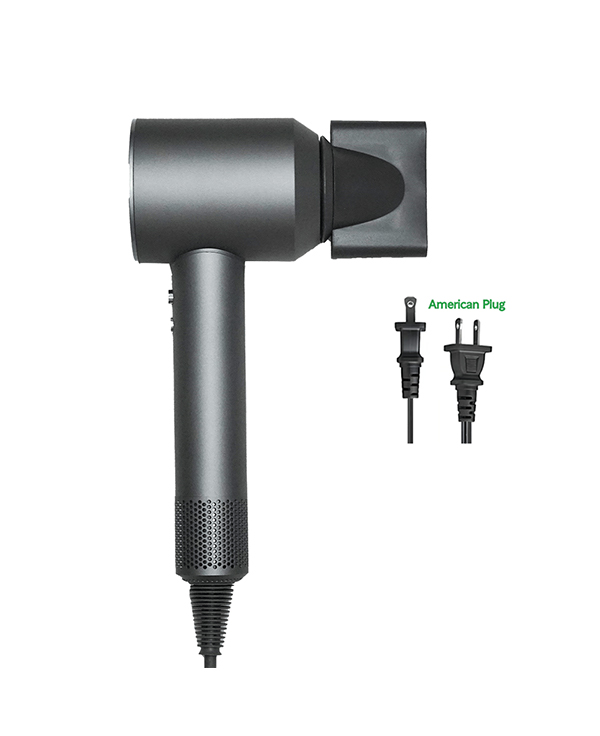
Hotel-Grade hair dryer for Travel: Hotel Luxury On the Go
Industry Background and Market Demand
The global travel industry has seen a resurgence post-pandemic, with business and leisure travelers increasingly prioritizing convenience and comfort. A key aspect of this demand is the expectation of hotel-quality amenities in personal travel gear. Among these, hotel-grade hair dryers have gained traction as a niche yet growing segment.
Unlike consumer-grade dryers, hotel-grade models are engineered for durability, performance, and compactness—qualities that appeal to frequent travelers, hospitality procurement managers, and premium retail buyers. The market is driven by:
- Rising expectations for in-room amenities (hotels seek reliable, long-lasting dryers).
- Growth in compact, high-performance personal care devices (travelers demand professional-grade tools).
- Sustainability concerns (energy efficiency and longevity reduce replacement cycles).
Core Concept: What Defines a Hotel-Grade Travel Hair Dryer?
A hotel-grade hair dryer is not merely a rebranded consumer product. It is designed to meet rigorous commercial use standards while maintaining portability. Key differentiators include:
1. Durability – Reinforced construction to withstand frequent handling and transport.
2. Performance – High airflow (≥ 70 CFM) and wattage (1600–2000W) for quick drying.
3. Compactness – Foldable handles and lightweight materials (< 1.5 lbs) for easy packing.
4. Safety & Compliance – Dual-voltage capability, thermal cutoffs, and certifications (UL, CE, RoHS).
Product Structure, Materials, and Manufacturing
1. Motor Technology
The core of a high-performance dryer is its motor. Brushless DC motors are increasingly favored over traditional AC motors due to:
- Higher energy efficiency (reduced heat waste).
- Longer lifespan (no carbon brush wear).
- Quieter operation (critical for hotel environments).
2. Heating Element & Airflow Design
- Ceramic or tourmaline heating elements provide even heat distribution, minimizing damage to hair.
- Aerodynamic nozzles optimize airflow, reducing drying time by 20–30% compared to basic models.
3. Materials & Build Quality
- Housing: Reinforced ABS or polycarbonate for impact resistance.
- Cord: Tangle-resistant, braided nylon with a swivel base to prevent wear.
- Internal Wiring: High-temperature-resistant insulation to prevent short circuits.
4. Manufacturing Standards
Leading manufacturers adhere to:
- ISO 9001 (quality management).
- IPX4 (splash resistance).
- Automated stress testing (drop tests, thermal cycling).
Key Factors Affecting Quality & Performance
1. Motor Efficiency – Determines drying speed and energy consumption.
2. Heat Control – Overheating degrades components; precision thermostats are critical.
3. Ergonomics – Weight distribution affects user fatigue during prolonged use.
4. Regulatory Compliance – Non-compliant units risk recalls or bans in key markets.
Supplier Selection & Supply Chain Considerations
Procurement teams evaluate suppliers based on:
- Proven OEM/ODM experience in professional haircare.
- Component traceability (e.g., motors from reputable suppliers like Nidec or Panasonic).
- Scalability – Ability to meet bulk orders (hotels typically order in lots of 500+).
- After-Sales Support – Warranty policies and spare parts availability.
Common Industry Painpoints
1. Balancing Power & Portability – High-wattage dryers often sacrifice compactness.
2. Voltage Compatibility – Dual-voltage support is essential but increases costs.
3. Counterfeit Products – Cheap imitations flood the market, damaging brand reputation.
4. Sustainability Pressures – Hotels demand recyclable materials without compromising durability.
Applications & Case Examples
1. Luxury Hotels – Chains like Four Seasons and Ritz-Carlton opt for dryers with silent operation and rapid drying.
2. Business Travelers – Compact models with folding handles fit into carry-ons.
3. Salon Professionals – Some stylists use travel dryers for on-location services.
Current Trends & Future Developments
1. Smart Features – Bluetooth-enabled dryers with app-based heat settings.
2. Sustainable Materials – Bio-based plastics and modular designs for easier recycling.
3. Enhanced Portability – Further weight reduction via advanced composites.
FAQ
Q: Can hotel-grade dryers be used at home?
A: Yes, but they are optimized for frequent use and travel. Home users may prefer quieter models.
Q: How do I verify a supplier’s quality claims?
A: Request third-party test reports (e.g., UL certification) and sample units for stress testing.
Q: Are ionic dryers worth the premium?
A: Ionic technology reduces frizz but adds cost. Hotels prioritize durability over niche features.
Conclusion
The hotel-grade hair dryer segment bridges the gap between commercial reliability and personal convenience. As travel resumes globally, demand will grow for devices that deliver professional performance in a portable form factor. Manufacturers must focus on motor efficiency, material innovation, and compliance to stay competitive in this evolving market.
(Word count: 1,280)
 Dongguan Allgreen Intelligent Technology Co., Ltd.





 Phone
Phone
Comment
(0)