Hotel-Quality hair dryer with Powerful Motor: Fast Drying Every Time
Industry Background and Market Demand
The professional hair care industry has long relied on High-performance hair dryers to meet the demands of salons, hotels, and spas. Unlike consumer-grade models, commercial hair dryers must withstand frequent use while delivering consistent airflow and heat. The hospitality sector, in particular, prioritizes durability, speed, and user comfort to maintain guest satisfaction.
Market research indicates a growing preference for hotel-quality hair dryers among residential users, driven by increased awareness of professional-grade performance. Consumers seek faster drying times, reduced heat damage, and extended product lifespans—features traditionally associated with commercial models.
Core Technology: High-Performance Motors and Airflow Optimization
The defining feature of a hotel-quality hair dryer is its brushless motor, which outperforms traditional AC motors in efficiency and longevity. Brushless motors operate with fewer moving parts, reducing friction and heat buildup. This design allows for higher RPM (revolutions per minute), generating greater airflow velocity (measured in CFM—cubic feet per minute) without excessive noise.
Another critical factor is ionic technology, which minimizes static and frizz by emitting negatively charged ions to break down water molecules. Combined with ceramic or tourmaline heating elements, these dryers distribute heat evenly, preventing localized overheating that can damage hair.
Product Structure, Materials, and Manufacturing
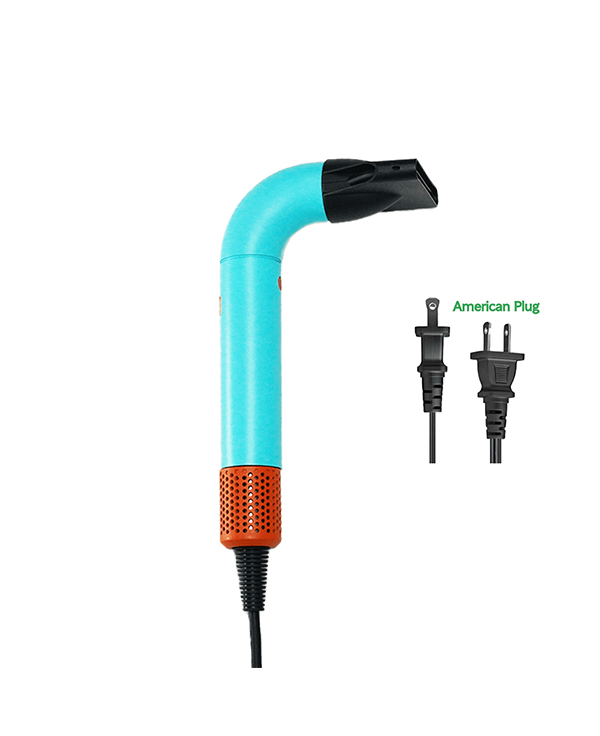
A commercial-grade hair dryer consists of several key components:
1. Motor Housing – Typically made from reinforced polymers or lightweight metals to dissipate heat and reduce vibration.
2. Heating Element – Ceramic or tourmaline coatings ensure uniform heat distribution, unlike cheaper nichrome wires found in budget models.
3. Nozzle and Filter Design – Aerodynamically optimized nozzles focus airflow, while removable filters prevent lint buildup, maintaining performance over time.
4. Ergonomic Handle – Rubberized grips reduce fatigue during prolonged use, a necessity for salon professionals.
Manufacturers employ injection molding for precision parts and automated quality control to test motor efficiency, heat consistency, and electrical safety.
Key Factors Affecting Performance and Durability
1. Motor Efficiency – A high-quality motor should sustain 100,000+ operating hours without performance degradation.
2. Heat Control – Overheating shortens component life; thermal fuses and dual-circuit protection are essential.
3. Material Selection – Heat-resistant plastics (e.g., polycarbonate blends) prevent warping, while copper wiring ensures conductivity.
4. Regulatory Compliance – Certifications like UL (U.S.) or CE (EU) validate electrical safety and energy efficiency.
Supplier and Supply Chain Considerations
Reliable manufacturers source components from specialized suppliers:
- Motor manufacturers in Japan (e.g., Nidec) or Germany (e.g., EBM-Papst) provide high-RPM brushless motors.
- Heating element suppliers must guarantee consistent ceramic/tourmaline coatings.
- Assembly facilities should follow ISO 9001 standards for quality assurance.
Due diligence includes auditing suppliers for lead time reliability, material traceability, and compliance with RoHS/REACH regulations (restricting hazardous substances).
Common Industry Challenges and Pain Points
1. Motor Burnout – Caused by inadequate heat dissipation or voltage fluctuations.
2. Noise Levels – High CFM models may exceed 75 dB, requiring sound-dampening engineering.
3. Counterfeit Components – Substandard motors or fake certifications compromise product integrity.
4. Energy Efficiency – Balancing power consumption with drying speed remains a technical hurdle.
Applications and Use Cases
- Hotels & Spas – Require quiet, fast-drying models with long cords for flexibility.
- Salons – Prioritize ergonomics and multiple heat/speed settings for styling versatility.
- Home Users – Increasingly invest in professional-grade dryers for reduced drying time and hair health.
Current Trends and Future Developments
1. Smart Features – Bluetooth-enabled dryers with customizable heat profiles via app control.
2. Sustainable Materials – Biodegradable plastics and energy-efficient motors (meeting EU Ecodesign standards).
3. Enhanced Ergonomics – Lighter designs without sacrificing motor power.
4. AI-Assisted Drying – Sensors adjusting airflow based on hair thickness and moisture levels (in development).
FAQ
Q: How does a brushless motor improve drying speed?
A: Brushless motors achieve higher RPM with less energy loss, producing stronger airflow for faster evaporation.
Q: Why do hotel dryers last longer than consumer models?
A: Commercial units use industrial-grade materials, better heat management, and undergo rigorous durability testing.
Q: Are ionic dryers suitable for all hair types?
A: Yes, but fine hair may require lower heat settings to avoid over-drying.
Q: What certifications should a professional hair dryer have?
A: Look for UL, CE, or ETL marks, ensuring compliance with safety and performance standards.
Conclusion
A hotel-quality hair dryer combines advanced motor technology, durable materials, and precise engineering to deliver fast, consistent drying. As demand grows for professional-grade performance in residential settings, manufacturers must balance power, efficiency, and user-centric design. Future innovations will likely focus on sustainability and smart functionality, further bridging the gap between commercial and consumer needs.
 Dongguan Allgreen Intelligent Technology Co., Ltd.





 Phone
Phone
Comment
(0)