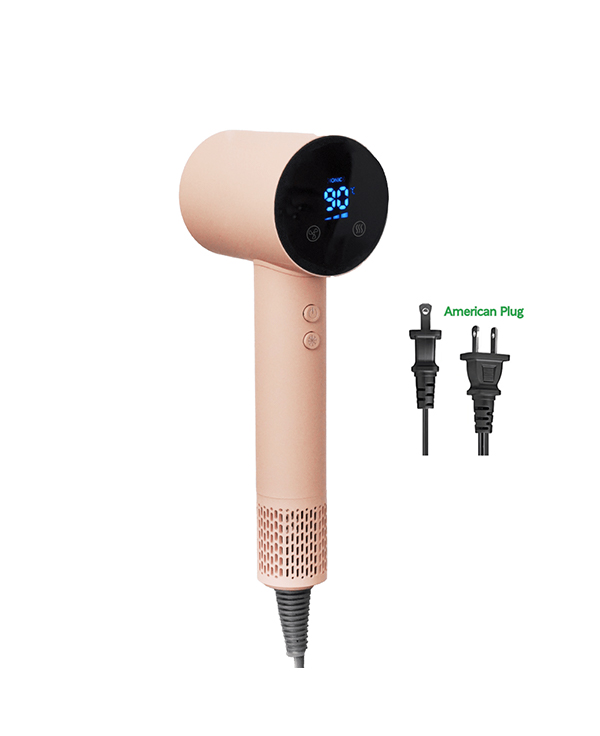
Sleek Fashion hair dryer: Fast Drying with a Fashionable Twist
Industry Background and Market Demand
The global hair dryer market has evolved significantly, driven by consumer demand for efficiency, ergonomics, and aesthetic appeal. Traditional models prioritized basic functionality, but modern users—particularly in the professional salon and premium home segments—expect advanced performance without compromising design.
Market research indicates a growing preference for lightweight, high-speed drying solutions with customizable heat and airflow settings. Additionally, sustainability concerns have pushed manufacturers to adopt energy-efficient motors and recyclable materials. The rise of influencer culture and social media has further amplified the demand for visually striking devices that complement modern interiors.
Core Technology and Key Features
The latest generation of fashion hair dryers integrates several critical advancements:
1. Brushless DC Motors
Unlike traditional AC motors, brushless DC (BLDC) motors offer higher energy efficiency, reduced noise, and extended lifespan. These motors enable precise control over airflow speed (up to 110 mph) while minimizing heat damage to hair.
2. Ionic and Ceramic Technology
Negative ion generators neutralize static by breaking down water molecules, reducing drying time by up to 30%. Ceramic heating elements distribute heat evenly, preventing localized overheating that can weaken hair strands.
3. Ergonomic and Aesthetic Design
Weight distribution is optimized through compact motor placement and reinforced polymer housings. Matte finishes, metallic accents, and customizable color options cater to both professional stylists and design-conscious consumers.
Product Structure and Manufacturing Considerations
A high-performance fashion hair dryer consists of:
- Housing: Durable thermoplastics (e.g., ABS or polycarbonate) with heat-resistant coatings.
- Heating Element: Ceramic or tourmaline-coated components for uniform heat dispersion.
- Airflow System: Aerodynamically designed vents and mesh filters to prevent debris buildup.
- Control Interface: Digital touch panels or magnetic dials for adjusting temperature (50–75°C) and airflow (1.5–2.5 m³/min).
Manufacturing precision is critical—poorly aligned components can cause turbulence, increasing noise and reducing efficiency. Injection molding and automated assembly ensure consistency in high-volume production.
Key Factors Affecting Performance
1. Motor Efficiency: BLDC motors must maintain stable RPM under varying loads.
2. Thermal Management: Overheating protection circuits prevent motor burnout and plastic deformation.
3. Material Selection: Heat-resistant polymers and corrosion-resistant grilles enhance durability.
4. User Interface: Intuitive controls reduce operational errors in professional settings.
Supplier and Supply Chain Standards
Reliable suppliers must meet:
- Certifications: CE, UL, or RoHS compliance for safety and environmental standards.
- Component Traceability: Sourced motors and heating elements from Tier 1 manufacturers.
- Scalability: Ability to adjust production volumes without compromising lead times.
OEMs often audit factories for ISO 9001 compliance and conduct stress-testing on prototypes before mass production.
Industry Challenges and Common Issues
- Heat Damage Concerns: Excessive temperatures (>80°C) can degrade hair keratin.
- Noise Levels: Motors exceeding 75 dB may deter home users.
- Battery Limitations (Cordless Models): Runtime and recharge cycles remain a hurdle for portable units.
- Counterfeit Components: Substandard imitation parts risk product failures and safety hazards.
Applications and Use Cases
1. Salon-Grade Use: Stylists prioritize fast drying (under 10 minutes for thick hair) and durability (8,000+ hour motor life).
2. Travel-Friendly Models: Compact designs (<400g) with dual-voltage compatibility.
3. Smart Home Integration: Voice-controlled settings via IoT-enabled devices.
Current Trends and Future Outlook
1. Sustainability: Brands are adopting biodegradable plastics and modular designs for easier recycling.
2. AI-Driven Customization: Sensors that adjust heat based on hair thickness and moisture levels.
3. Wireless Charging: Eliminating cords for salon safety and convenience.
4. Augmented Reality (AR) Styling: Virtual try-on features linked to mobile apps.
FAQ: Common Technical Questions
Q: How does ionic technology reduce drying time?
A: Negative ions break water droplets into smaller particles, accelerating evaporation without high heat.
Q: What maintenance extends a hair dryer’s lifespan?
A: Regular filter cleaning and avoiding blockages in air vents prevent motor strain.
Q: Are ceramic-coated dryers safer for fine hair?
A: Yes—ceramic emits far-infrared heat, which penetrates gently without excessive surface drying.
Conclusion
The fusion of engineering precision and design innovation has redefined the hair dryer market. As manufacturers balance performance, aesthetics, and sustainability, the next generation of devices will likely integrate smarter, more adaptive technologies. For B2B buyers, prioritizing suppliers with robust R&D and compliance testing ensures long-term competitiveness in this evolving sector.
 Dongguan Allgreen Intelligent Technology Co., Ltd.





 Phone
Phone
Comment
(0)